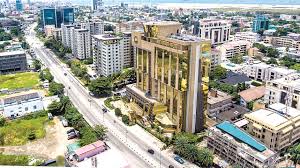
When Dealroom released its Global Tech Ecosystem Index (GTEI) 2025, nobody expected Lagos to top the list. But evidently, the Nigerian megacity ranked ahead of Istanbul, Pune, Mumbai, Riyadh, and Ho Chi Minh City, cities with older tech traditions, deeper infrastructure, and more stable public utilities.
To some observers, the ranking came as a surprise. To those who have followed Lagos closely, it felt inevitable. While other cities are still drafting digital economy roadmaps, Lagos has been stress-testing the future of technology in real time, under pressure, at scale, and without waiting for ideal conditions.
This is the story of what Lagos is doing differently, and why the next wave of global tech growth is increasingly being written in places that look nothing like Silicon Valley.
Dealroom’s GTEI ranking is not about hype or headline-grabbing startups. It measures velocity, how fast ecosystems are growing based on startup formation, venture capital inflows, talent density, and overall maturity. In short, it tracks momentum.
That is where Lagos stands out.
The city’s startup ecosystem has expanded at a pace that outstrips not only African peers but also emerging hubs across Asia, Latin America, and the Middle East. Lagos’ rise reflects a broader global shift. Innovation is no longer confined to traditional capitals. It is moving to cities where problems are urgent, markets are large, and experimentation is constant.
Lagos sits squarely at the intersection of all three.
It is not an easy place to build anything. Power outages are routine. Traffic can consume hours. Infrastructure often lags behind population growth. Regulation can be unpredictable. At times, the city feels perpetually stretched to its limits.
Yet that pressure is precisely what has turned Lagos into an unusually powerful engine for innovation.
Startups in Lagos are not built for comfort. They are built for resilience. Products are designed to function despite unreliable electricity, inconsistent connectivity, low trust, and massive user volumes. Founders do not assume ideal conditions. They assume failure points and design around them.
The result is technology that works in the real world, not just on pitch decks. In Lagos, if a product cannot survive chaos, it simply does not survive.
One of Lagos’ quiet advantages is its refusal to wait for “complete” infrastructure before moving forward. In many underperforming states across the country, explanations for poor tech outcomes often focus on what the government has not yet done. In contrast, Lagos has consistently built on what already exists, while pushing forward despite gaps.
While fixed broadband penetration remains uneven, Lagos has leaned heavily into mobile-first connectivity. Affordable smartphones, competitive data pricing, and aggressive private-sector fibre deployment have created a digitally active population long before physical infrastructure fully caught up.
People bank, shop, learn, work, and socialize online, often entirely through their phones. This reality has shaped how startups build. Lightweight applications, low-bandwidth optimisation, and mobile-native experiences are standard, not optional.
Unlike older tech hubs that had to modernise legacy systems, Lagos startups skipped that stage entirely. There were no expensive data centres to protect and no outdated enterprise software to migrate. Founders built on APIs, cloud platforms, and modular tools from the outset.
This approach reduced capital costs, accelerated deployment, and allowed small teams to scale quickly. Digital infrastructure in Lagos is not perfect, but it is functional and, more importantly, flexible.
The Lagos tech story is often mischaracterised as either a government success or a government failure. In reality, it is more nuanced.
Lagos State has played a role through digital identity initiatives, transport data systems, smart city pilots, and tech-friendly procurement. However, the government is not the centre of the ecosystem, and that distinction matters.
Rather than attempting to centrally plan innovation, regulators have often adopted a pragmatic, learning-by-doing approach, particularly in fintech and digital services. Regulatory sandboxes emerged before rigid frameworks. Licensing evolved alongside products.
This flexibility allowed startups to experiment early, fail quickly, and iterate, while the state regulators observed and adjusted. In many emerging cities, policy comes first, and innovation follows. In Lagos, innovation often leads, and policy adapts.
The city’s tech workforce also differs sharply from that of traditional hubs. It is younger, more informal, and often self-taught.
Bootcamps, online courses, community meetups, and open-source collaboration have replaced formal pipelines as the primary engines of talent development. Skills spread horizontally through communities rather than vertically through institutions.
Local angel investors and micro-funds play a critical role, backing ideas that international investors may initially view as unfamiliar or risky. As startups mature, global capital follows, not because Lagos is fashionable, but because the fundamentals make sense.
Crucially, founders in Lagos do not wait for capital to validate their ideas. They build first and raise later. That culture sustains momentum.
Technology born in Lagos is shaped by constraint, and that has become a competitive advantage. Products are designed for low-bandwidth, low-trust environments, fragmented payments, and diverse regulatory conditions. These realities mirror conditions across much of Africa, South Asia, Southeast Asia, and Latin America.
As a result, Lagos startups often scale naturally into other emerging markets, not by copying Western models, but by exporting solutions already tested under similar pressures.
Cities like Istanbul and Pune have deep talent pools and long innovation histories. Mumbai offers scale and capital. Riyadh provides state-backed funding and infrastructure. So why did Lagos rise faster?
Speed.
Lagos iterates faster, pivots quicker, and tolerates risk more readily. There are fewer legacy systems to protect and fewer assumptions about how things are supposed to work. In emerging tech ecosystems, agility often beats size, and Lagos understands this instinctively.
None of this suggests that Lagos’ rise is guaranteed. Infrastructure gaps remain significant. Power supply is unreliable. Housing and transportation costs are rising. Federal policy uncertainty continues to pose risks, particularly for regulated sectors.
There is also a human cost. Founder burnout, pressure on talent, and the constant demand to do more with less are real challenges. The margin for error remains thin.
Sustaining growth will require smarter infrastructure investment, clearer national policies, and deliberate talent development. Momentum alone will not be enough indefinitely.
Still, Lagos’ success offers lessons that extend far beyond Nigeria. Build for constraints, not perfection. Let ecosystems grow from the bottom up. Prioritise financial infrastructure early. Treat young people as creators, not just consumers. Move fast, then refine policy.
The future of technology is not being written only in glass towers and climate-controlled campuses. It is being forged in crowded cities where innovation is not optional but essential for survival.
The GTEI 2025 ranking did not make Lagos a global tech hub. It confirmed what the city has been quietly proving for years. Lagos did not copy Silicon Valley or wait for permission. It built its own digital logic, shaped by urgency, scale, and constant pressure.
In doing so, it may have created the most relevant tech ecosystem of the decade. The real question now is not whether Lagos deserves the top spot, but whether the world is ready to learn from a city that built the future without waiting for ideal conditions.
Shuaib S. Agaka is a Tech Journalist and Digital Policy Analyst based in Kano ([email protected])