

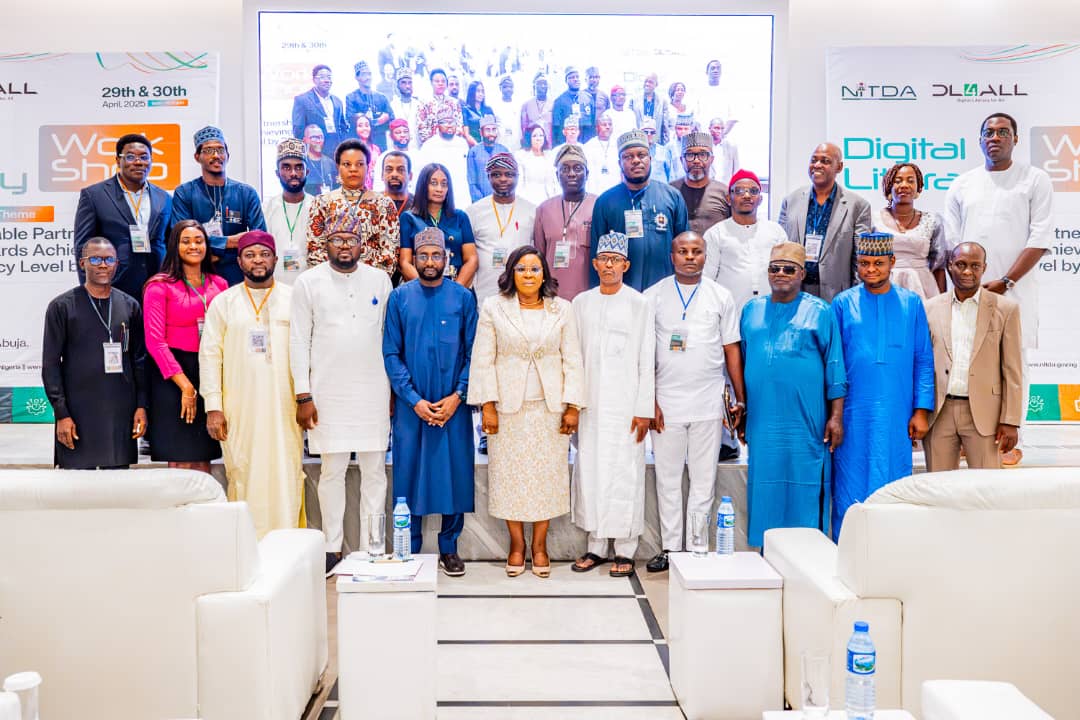
NITDA Hosts Inaugural Digital Literacy Stakeholders Workshop, Sets 95% Literacy Target by 2030
The National Information Technology Development Agency (NITDA) has successfully convened the first-ever Digital Literacy Stakeholders Workshop, aimed at accelerating Nigeria’s journey toward achieving 95% digital literacy by the year 2030.
The two-day workshop, held in Abuja, was themed “Building Sustainable Partnerships and Pathways Towards Achieving 95% Digital Literacy Level by 2030.” It brought together stakeholders from across the government, private sector, academia, civil society, and development partners to align efforts, consolidate strategies, and promote inclusive digital growth.
In a statement signed by its Director of Corporate Communications and Media Relations, Mrs. Hadiza Umar, the workshop was anchored on the National Digital Literacy Framework (NDLF), launched in 2023. Discussions centered on creating a roadmap to reach 70% digital literacy by 2027 and 95% by 2030. Participants tackled critical issues such as innovation in underserved communities, stakeholder profiling, and establishing a centralised data management system to track progress and guide policy decisions.
Key Resolutions
The workshop produced several strategic resolutions, including:
Enhanced Collaboration: Stakeholders agreed to synergise efforts, share resources, and avoid duplication for greater impact.
National Digital Literacy Data Framework: NITDA will host a centralised platform for evidence-based planning and progress monitoring.
Stakeholder Categorisation: Participants were grouped as Providers, Enablers, and Funders to streamline roles and engagement.
Inclusive Programming: Special attention will be given to women, youth, persons with disabilities, and remote communities.
Sustainability Focus: Emphasis will be placed on long-term, scalable projects over short-term interventions.
To sustain momentum and ensure accountability, participants resolved to:
- Establish a National Digital Literacy Technical Committee to oversee implementation.
- Hold the Digital Literacy Stakeholders Workshop annually to review progress.
- Promote open data-sharing via a NITDA-managed platform.
- Design and implement culturally relevant and economically feasible digital literacy programmes
Working Group Inaugurated
A key highlight of the event was the inauguration of the National Digital Literacy Working Group, chaired by David Daser, President of the Digital Bridge Institute (DBI). The group will provide technical oversight and drive the implementation of the NDLF and workshop resolutions.
Supporting Renewed Hope Agenda
The initiative aligns with President Bola Ahmed Tinubu’s Renewed Hope Agenda, reinforcing the federal government’s commitment to digital inclusion, economic empowerment, and national development.













 has successfully convened the first-ever Digital Literacy Stakeholders Workshop)