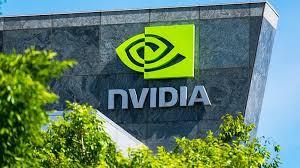
Nvidia has secured approval from the administration of former US President Donald Trump to resume sales of its advanced H20 computer chips to China, ending a three-month export ban that had threatened the company’s business in one of its largest markets.
Nvidia CEO Jensen Huang confirmed the development in a company blog post late Monday and expanded on the breakthrough during an interview on China’s state-run CGTN, excerpts of which have since circulated on X (formerly Twitter).
The announcement follows weeks of quiet but intense lobbying by Huang and other technology leaders, who have urged Washington to ease export restrictions that were tightened earlier this year over national security concerns.
The H20 chip, designed to accelerate artificial intelligence applications, is one of Nvidia’s flagship processors in the booming AI sector. The company recently became the world’s first to see its market value cross the $4 trillion mark, driven largely by demand for its cutting-edge chips.
Huang’s visit to Beijing this week — where he is attending a major supply chain conference and meeting Chinese officials — appears to have capped off those lobbying efforts. State media footage showed him speaking with Ren Hongbin, head of the China Council for the Promotion of International Trade, during the China International Supply Chain Expo, where Nvidia is exhibiting.
The approval comes amid ongoing tensions in the US-China tech rivalry. Successive US administrations have ramped up export controls on advanced semiconductors over fears that Chinese companies could repurpose civilian AI technologies for military applications. The emergence of China’s homegrown DeepSeek AI chatbot in January heightened those anxieties.
In April, the White House had announced new curbs on Nvidia’s H20 chips and AMD’s competing MI308 chips. Nvidia warned at the time that the tighter restrictions could cost the company an additional $5.5 billion in lost revenue and warned that over-regulation risked ceding ground to Chinese AI developers.
Huang and other executives argued that while safeguarding national security remains important, aggressive controls could backfire — hurting American competitiveness and driving other global players to turn to China’s rapidly evolving AI ecosystem instead.
The green light from Washington comes just months into Trump’s second term in office and marks a sharp policy shift from the more restrictive approach under President Joe Biden, whose administration last January rolled out a stricter framework for exporting high-end AI chips.
Despite the positive news, Nvidia’s US-listed shares slipped slightly by 0.5% in after-hours trading on Monday. However, shares traded in Frankfurt rose by 3.2% early Tuesday, reflecting investor optimism about renewed access to the Chinese market.
With the H20 chips back on the table, Nvidia looks set to maintain its dominant role in the global AI chip race — and the latest development could ease some of the geopolitical headwinds facing US chipmakers competing in the world’s largest technology market.