Nigeria’s telecommunications industry saw its total operating costs (OPEX) surge to a record N5.85 trillion in 2024 — up 85% from N3.16 trillion in 2023 — according to new data from the Nigerian Communications Commission (NCC).
The NCC attributed the sharp rise to persistent inflation, foreign exchange volatility, rising energy costs, and high Right-of-Way (RoW) fees charged by several state governments.
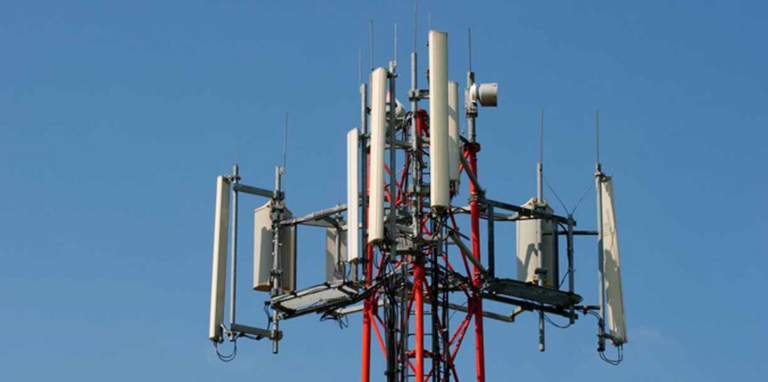
RoW fees — paid by telecom operators to deploy fibre-optic cables — remain a major obstacle to broadband rollout, despite federal guidelines capping charges at N145 per linear meter. Some states still demand thousands of naira per meter, with Ogun State topping the list at N9,477.
The NCC disclosed that 11 states, including Adamawa, Bauchi, Enugu, and Zamfara, have now waived RoW fees entirely to encourage broadband expansion. However, operators warn that hidden levies in some states continue to stifle investment.
The sector’s capital expenditure (CAPEX) also rose sharply to N2.9 trillion in 2024 — a 159% year-on-year increase — driven by inflation, currency devaluation, and 5G network expansion.
Despite mounting costs, the telecom sector recorded N7.67 trillion in revenue, up 44.7% from N5.30 trillion in 2023, buoyed by strong data consumption and enterprise services. Broadband penetration stood at 49.3% as of September 2025, far short of the government’s 70% target under the National Broadband Plan.