Tesla’s share of the U.S. electric vehicle (EV) market has slumped to its lowest level in nearly eight years, as customers increasingly turn to newer models from rival automakers.
According to data from Cox Automotive shared with Reuters, Tesla accounted for just 38% of EV sales in August, the first time its share has fallen below 40% since October 2017, when it was ramping up Model 3 production.
The decline underscores growing pressure on Tesla, which once commanded more than 80% of the U.S. EV market. While competitors are aggressively launching new models with incentives, Tesla has shifted its focus toward developing robotaxis and humanoid robots, delaying plans for cheaper cars.
Its last new vehicle, the Cybertruck, launched in 2023 but failed to replicate the success of the Model 3 sedan or the Model Y SUV. A refreshed Model Y was also underwhelming, with Tesla now facing a likely second consecutive year of sales decline.
Despite sales rising 7% in July and 3.1% in August, Tesla’s growth lagged behind the broader EV market, which grew 24% and 14% respectively in those months. Analysts warn that the looming expiration of federal EV tax credits at the end of September could further tighten margins.
Cox Automotive’s Stephanie Valdez Streaty said Tesla risks losing ground without new products. “When you don’t have fresh models, your share will start to decline,” she noted.
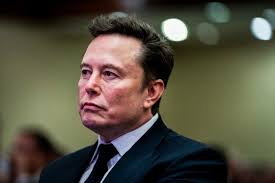
Adding to the challenges, CEO Elon Musk’s political associations have dented the brand, following his public split with former U.S. President Donald Trump.
Tesla’s board, meanwhile, has proposed a record-breaking $1 trillion pay package for Musk, tied to boosting the company’s valuation to $8.5 trillion over the next decade.