Truth Under Siege: Nigeria’s Urgent War Against Digital Misinformation
By Shuaib S. Agaka
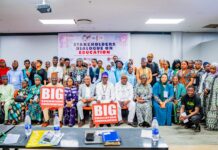
Listening to the Director General of NITDA, Mallam Kashifu Inuwa, speak at the Centre for Crisis Communication (CCC) event themed “Managing Crisis in a Digital Age” drove home an uncomfortable truth: the internet is no longer just a network. It has become a battlefield—vast, chaotic, and invisible—where the weapons are not bullets but information. One rumour can detonate faster than a grenade. One manipulated video can turn neighbours against each other. One cleverly worded headline can ruin reputations, tilt elections, or rattle entire economies.
The average Nigerian now stands inside this war with no choice but to fight. Elections have been swayed by viral narratives. Businesses have collapsed under coordinated online scams. Entire communities have panicked because of a single broadcast message that travelled far before anyone had the chance to verify it. In this new reality, the soldiers are no longer only cybersecurity analysts working in dim rooms. They are everyday citizens—scrolling, sharing, and forwarding—often unaware that they are on the frontlines of a conflict they cannot see.
Misinformation did not arrive suddenly. It seeped in quietly, wearing the friendly disguise of forwarded messages, trending hashtags, and “breaking news” without sources. Nigeria’s rapid digital adoption outpaced its capacity to manage the risks. As smartphones became cheaper and connectivity expanded, information began to move faster than governance or public understanding could keep up. For many, the screen replaced the public square. Opinion became fact. Virality became legitimacy.
During moments of insecurity, misinformation accelerates even more violently. Reports of attacks—some real, many exaggerated or fabricated—trigger instant panic. In periods of tension, people believe whatever reaches them first. Verification becomes an afterthought. In today’s digital world, truth often moves slower than lies.
Yet the threat is not limited to politics or security. The economy bleeds too. Online investment scams have emptied people’s savings. Fake job postings lure desperate young Nigerians into extortion traps. A single viral rumour can damage a company’s reputation overnight. Anything online can be weaponised—and once it spreads, it rarely dies.
What makes this war even more dangerous is how cheap and easy it has become to create convincing falsehoods. Modern espionage does not require spies lurking in shadows. Artificial intelligence, bot networks, and deepfake tools now perform the task. A realistic but fake video can ignite unrest. Thousands of automated accounts can simulate public opinion. Entire false movements can be manufactured from laptops in distant countries.
One unverified post can cause a stampede at a fuel station. A single voice note can trigger panic-buying. A rumour about insecurity can shut schools, empty markets, and cripple local economies. These are not harmless digital errors. They are acts of sabotage—sometimes deliberate, sometimes careless, but always costly.
In this war of misinformation, someone must stand guard. Fortunately, Nigeria is not unarmed. Agencies like NITDA, the Centre for Crisis Communication (CCC), and media institutions such as the Voice of Nigeria now function as early-warning systems—detecting threats, verifying claims, and building communication frameworks to contain digital chaos before it spills into real life.
NITDA, in particular, has become one of the most visible responders. Beyond shaping the nation’s digital policy, it is now a frontline defender of information security, issuing safety advisories and educating the public on responsible digital behaviour. The agency recognises that cyber threats are not always technical. Sometimes they are emotional, social, and psychological. A rumour can be as dangerous as ransomware. A trending lie can destabilise faster than any breached firewall.
The CCC acts as a first responder during uncertainty. When false alarms about attacks, disease outbreaks, or political events begin to circulate, the Centre works to verify facts and calm the public. In such moments, a single press release can be the difference between panic and peace.
Fact-checkers, journalists, digital rights advocates, and civil society organisations form yet another layer of Nigeria’s defence. They track misleading narratives, expose falsehoods, and educate the public about digital hygiene. Their quiet, meticulous work prevents damage long before most people even realise there was danger.
Still, despite growing defences, Nigeria remains vulnerable. Policy responses struggle to match the speed of technological disruption. Regulation moves slowly, but falsehoods fly at the speed of light. Many agencies still lack the tools, experts, and advanced analytics needed to monitor coordinated digital attacks in real time. Countering modern disinformation campaigns requires capabilities that Nigeria is still building.
Beyond technology, the greatest weakness is social. A large portion of the population lacks digital literacy, and misinformation thrives wherever verification is weak. Many Nigerians encounter “news” first on WhatsApp groups, Facebook pages, and TikTok clips—not from credible media. Rumours spread fastest in communities where trust is valued above truth. A familiar voice note becomes gospel. A manipulated image that aligns with existing fears becomes evidence.
Bad actors understand this. They know that slow policy, under-resourced institutions, and low digital literacy create the perfect breeding ground for confusion.
The struggle to defend truth in Nigeria’s digital ecosystem is far from over. Every technological advance creates new vulnerabilities. Actors behind misinformation are constantly evolving—whether foreign governments, political players, extremist groups, or opportunistic scammers. The internet, once hailed as a global marketplace of ideas, has become a battlefield where attention is ammunition, data is a weapon, and perception is the decisive frontline.
The digital future will not wait. The challenge is not merely to survive it but to shape it—building a space where truth rises above noise, where public discourse is informed rather than manipulated, and where Nigeria’s online ecosystem becomes a shield rather than an exposed frontier.
The war for credibility is permanent—but so is the possibility of victory.
Shuaib S. Agaka is a Tech Journalist and Digital Policy Analyst based in Kano.
Contact: [email protected]