Lessons from the NIPSS Memoir on AI Crisis Communication Study
By Shuaib S. Agaka
Some journeys end abruptly. Some ambitions collapse under the weight of institutional power. And sometimes, a certificate is denied—but the idea behind it refuses to die. That is the quiet but powerful message at the heart of Yushau A. Shuaib’s memoir, MNI versus MNIPR in NIPSS: Tackling Institutional Bullying. While the book documents the author’s ordeal at the National Institute for Policy and Strategic Studies (NIPSS), its most compelling chapter—Chapter Nine, “A Blessed Disappointment”—offers a story far richer than conflict. It is the story of a research project that outlived its disruption and found a larger purpose beyond the institution that tried to contain it.
The chapter begins with a simple but profound question: Who truly owns an idea? In Shuaib’s case, the idea was a research study titled Artificial Intelligence and Crisis Communication in Nigeria’s Public Sector: An Assessment. Approved during Senior Executive Course 47, the project sought to examine how AI could strengthen crisis communication across Nigeria’s public institutions. It was ambitious, timely and rooted in the author’s decades-long experience in journalism, public relations and crisis communication.
Then came the interruption.
Following Shuaib’s withdrawal from NIPSS—an episode he describes as emblematic of institutional bullying—the academic scaffolding supporting the research collapsed. The certificate he had hoped to earn vanished. Access to institutional resources disappeared. What had begun as a formal academic project suddenly became a personal struggle.
Many researchers would have abandoned the work. Nigerian institutions are littered with unfinished theses, abandoned dissertations and promising studies halted by bureaucracy, funding gaps or administrative hostility. But Shuaib’s project refused to die. As he writes, the research “outlived the controversy,” surviving not because of institutional support but because of its relevance to Nigeria’s crisis landscape.
That relevance is undeniable. Every major crisis in Nigeria now unfolds on two fronts: the crisis itself and the information war surrounding it. Terror attacks, disease outbreaks, floods, communal clashes—each is accompanied by a flood of misinformation, recycled videos, fabricated statements and manipulated casualty figures. In today’s Nigeria, misinformation is not a side effect of crisis; it is part of the crisis.
Shuaib’s study, anchored on Situational Crisis Communication Theory, Networked Crisis Communication Theory and Diffusion of Innovations Theory, explored how Artificial Intelligence could help institutions respond more effectively. Using a mixed‑methods approach, it surveyed communication professionals across security agencies, emergency management bodies and public institutions, while interviews with key stakeholders provided deeper insight into institutional readiness.
One of the study’s most striking findings is what Shuaib calls Nigeria’s awareness–adoption gap. Communication professionals increasingly understand AI. Many have attended workshops, experimented with generative tools and followed global trends. Yet institutional adoption remains shallow. AI is often used only for drafting statements or monitoring social media, while more advanced applications—predictive analytics, misinformation detection, intelligent crisis response—remain largely unexplored.
Nigeria has never lacked ideas. It has often lacked the institutional courage to implement them.
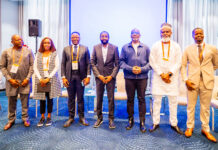
Ironically, the research that began inside NIPSS found its true life outside it. After the author’s withdrawal, the study continued to grow. Its findings were shared with the Centre for Crisis Communication (CCC) and the National Information Technology Development Agency (NITDA), sparking conversations on integrating AI into Nigeria’s crisis communication ecosystem. Those conversations contributed to the National Symposium on Artificial Intelligence and Crisis Communication at the National Defence College, where government officials, security agencies, academics and technology experts examined the future of crisis communication in Nigeria.
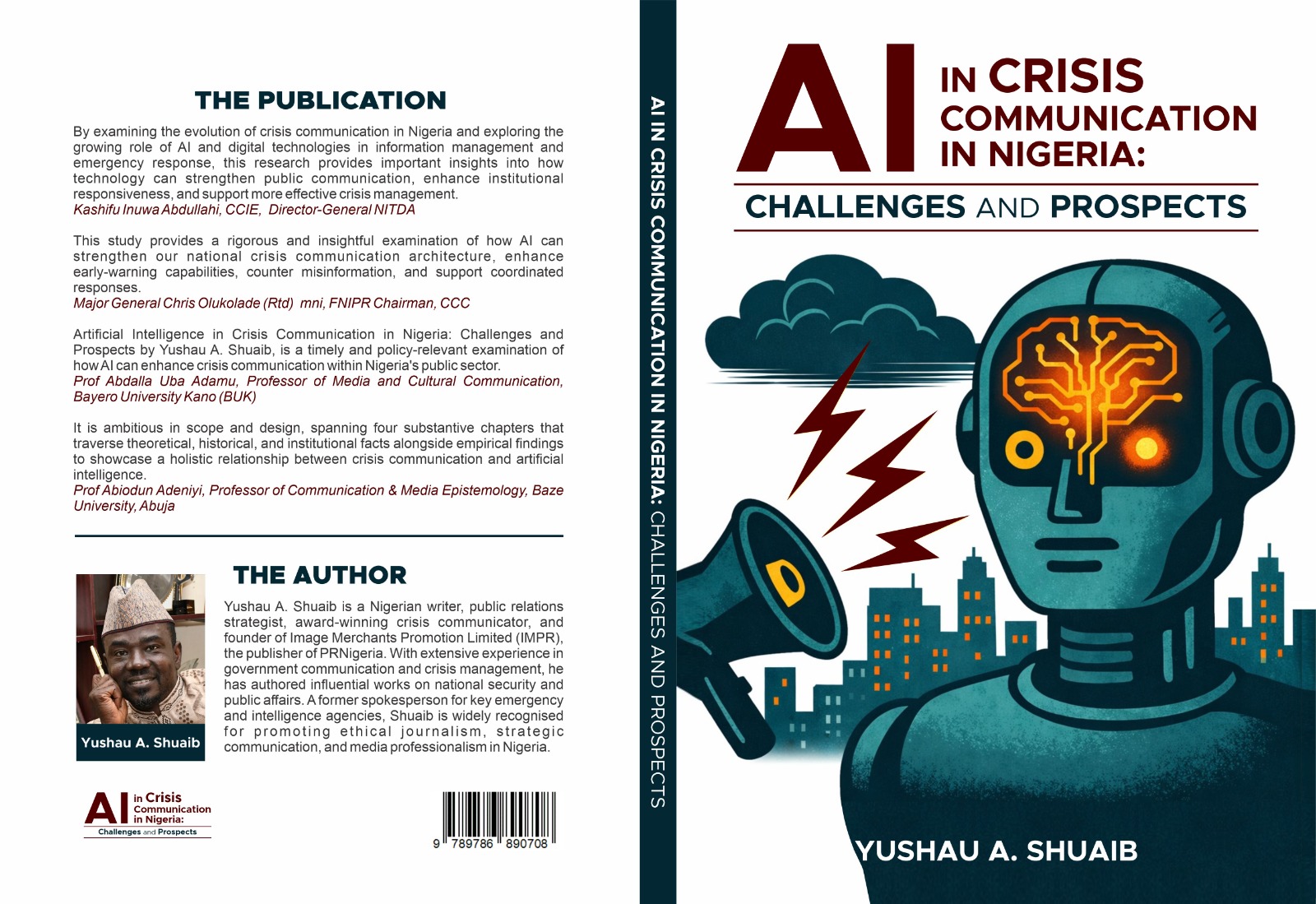
The project eventually evolved into a 200‑page book, AI in Crisis Communication in Nigeria: Challenges and Prospects, endorsed by leading figures in technology, strategic communication and academia. More remarkably, it earned international recognition, shortlisted for the Golden World Awards (GWA) of the International Public Relations Association (IPRA) in Athens, Greece.
This achievement is significant not only for the author but for Nigeria. It demonstrates that research rooted in Nigerian realities can compete globally. A project that could have died in the shadow of institutional conflict instead became an internationally recognised contribution to crisis communication scholarship.
This irony is not lost on the reader: the institution that approved the research also interrupted it. Yet the interruption became the beginning of a wider journey—one that carried the work beyond the classroom into policy discussions, national engagement and global recognition.
Chapter Nine stands out because it reframes disappointment as possibility. It reminds us that institutions entrusted with nurturing leadership must be careful not to silence ideas capable of benefiting society. The real loss in such situations is not always borne by the individual; sometimes, it is borne by the nation.
In the end, A Blessed Disappointment is not merely a chapter title—it is a thesis. It argues that some ideas are too important to remain confined to the place where they began. They find their own audience, their own purpose and, sometimes, the recognition they always deserved.
Shuaib’s memoir is a testament to intellectual resilience. It shows that while institutions may interrupt a career, they cannot stop an idea whose time has come.
Shuaib S. Agaka
Tech journalist and digital policy analyst, Kano