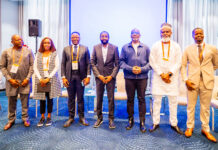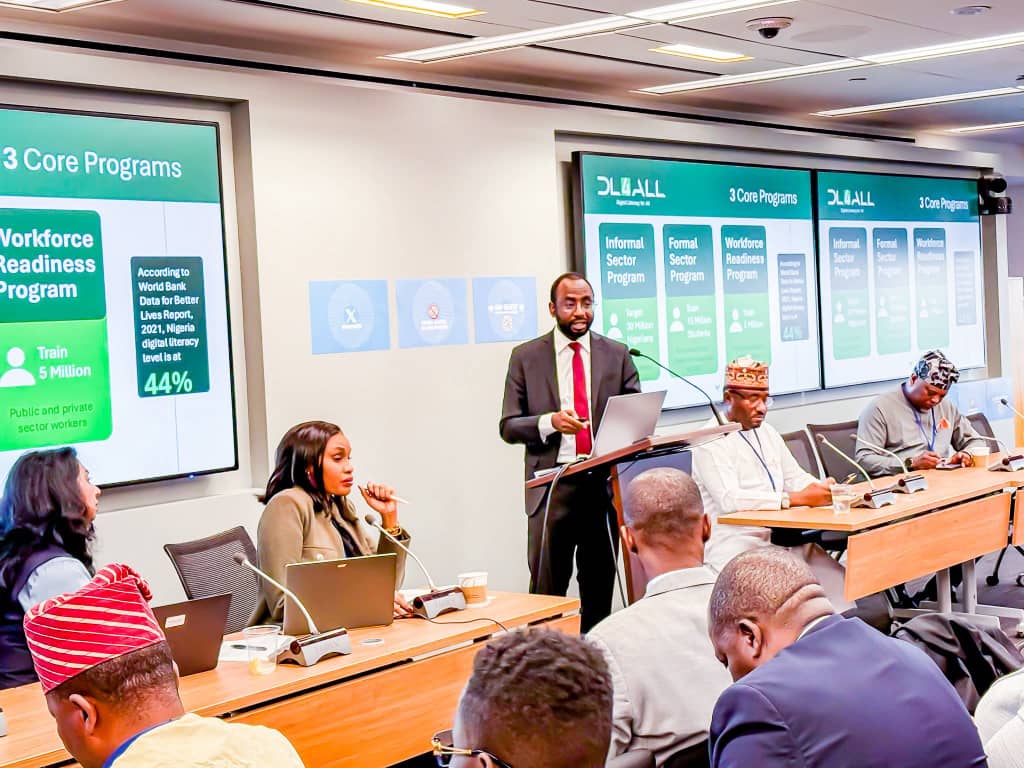
The Director General of the National Information Technology Development Agency (NITDA), Kashifu Inuwa, CCIE, has emphasized the vital role of renewable energy as a foundational enabler for digital innovation and inclusive growth across Nigeria’s rural communities.
Speaking as a panelist at the Civil Society Policy Forum during the 2025 Annual Meetings of the World Bank Group and International Monetary Fund (IMF) in Washington D.C., Inuwa stated that when power is available, connectivity follows, which then triggers true economic transformation.
“Renewable energy is not the destination. It is a catalyst—when there is power, connectivity follows, and that connectivity triggers true transformation,” he said.
Digital Skills as the Engine of Rural Prosperity
Inuwa illustrated how access to clean energy and technology transforms rural livelihoods, citing examples such as AI-powered farming tools, online platforms for women entrepreneurs, and remote digital jobs.
“A young person with internet access doesn’t need to migrate to Abuja or Lagos; he can work from his village and earn in dollars,” he noted, linking these initiatives to President Bola Ahmed Tinubu’s Renewed Hope Agenda, which prioritizes sustainability and diversification.
The NITDA boss detailed the government’s aggressive push for digital skills, disclosing that digital literacy is being integrated into Nigeria’s school curriculum from kindergarten to tertiary levels. Furthermore, digital competency is now a prerequisite for employment and promotion in the civil service. Through these initiatives, the agency aims to train 50 million Nigerians by 2027.
World Bank Commits to Energy Access and Gender Parity
Also speaking at the forum, Fowzia Hassan, Senior Operations Officer, Infrastructure at the World Bank Group, reaffirmed the Bank’s commitment to expanding energy access across Africa through its ambitious Mission 300 (M300) initiative, which targets 300 million new connections by 2030.
Hassan highlighted the gender disparity in the sector, citing data that women constitute only 32% of Africa’s renewable energy workforce, mostly in non-technical roles. She called for deliberate policies to enhance women’s participation in technical and leadership positions.
Hassan pointed to initiatives supported by the Bank, including the DAIRS program in Nigeria, designed to mobilize over $1 billion for solar systems, and the Women in Energy Network Africa (WEN-Africa), which aims to create 4,000 energy sector jobs for women within three years.
“Creating a clean, inclusive, and just energy transition is not just about connecting homes; it’s about empowering people, especially women and youth, to drive Africa’s prosperity,” Hassan concluded.