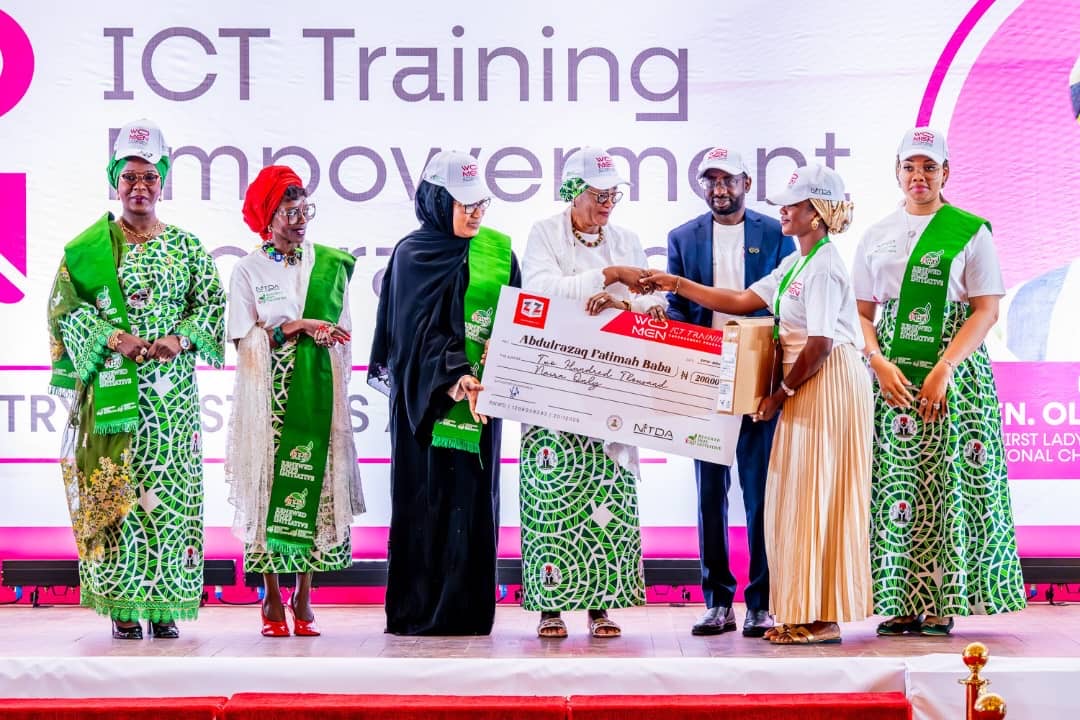
They arrived as beginners, uncertain and curious, mothers, students, and professionals. Many were stepping into a world they had long believed was not theirs. Months later, the digital world no longer feels distant. They can code. They can build. They can navigate technology with confidence. Across the six geopolitical zones of Nigeria, something has changed. Women who once stood outside the digital gate now stand before it with certainty. The question is no longer whether they can, but whether the digital economy will open its doors when they knock.
For many participants, technology had always seemed distant and intimidating. Some had never written a single line of code, while others had only observed computers being used for basic office tasks. The Renewed Hope Initiative (RHI) Women in ICT Training, organised by the National Information Technology Development Agency (NITDA), aimed to change that. Over several months, classrooms across the country became incubators of curiosity, creativity, and confidence.
Participants gained practical experience with emerging technologies, core digital skills, and developed the confidence to explore the digital world on their own terms. Beyond technical expertise, the programme emphasized a vital principle: cultivating problem-solving skills and a mindset to thrive in a digital economy.
Despite the success of the training, Nigeria’s tech ecosystem has not always been ready to fully welcome women. Industry data shows that women make up only 17 to 22 percent of the country’s tech workforce and remain underrepresented across various digital roles. Even as digital startups grow in major cities, gender disparities continue to persist.
Workplace culture and structural barriers continue to challenge women in tech. Many face assumptions about their technical competence, limited mentorship opportunities, and exclusion from high-profile projects. Female-led startups often struggle to attract investment, leaving talented women underutilised despite their training.
While some companies and initiatives actively recruit, mentor, and sponsor women, these efforts are uneven and largely concentrated in urban hubs, leaving many outside the mainstream labor market or reliant on informal networks. Across Nigeria, hiring pipelines remain limited, and structured internship or apprenticeship programmes are insufficient, particularly outside major cities, highlighting the persistent gap between skills development and real-world opportunities.
Funding and mentorship are also critical. Female-led startups often face difficulties in attracting investment, securing visibility, and accessing professional networks. Even when innovative solutions are developed, scaling them presents additional hurdles. Without adequate support, highly skilled women risk having their expertise underutilised.
Social and cultural factors further complicate the picture. Family responsibilities, marriage, and childcare expectations influence career choices, particularly in regions with strong traditional roles. Societal perceptions of technology as a male-dominated field can discourage women from pursuing tech careers or advancing into leadership positions. In some conservative communities, access to training or professional opportunities is limited, creating invisible walls that are as significant as financial or institutional barriers.
Government-led training alone cannot guarantee long-term impact. The integration of women into the digital economy requires collaboration between public institutions, private companies, and industry stakeholders. Employment pipelines, mentorship programmes, and funding mechanisms must align with skills development initiatives. Without deliberate policies from employers to recruit, retain, and promote women in tech, the talent emerging from programmes like RHI risks being underutilised.
Partnerships between government agencies and technology companies are essential to ensure training translates into real-world opportunities. Structured internships, apprenticeships, and placement programmes can bridge the gap between classroom learning and employment. Policy interventions that encourage investment in women-led startups, provide incentives for inclusive hiring, and establish workplace standards can amplify the impact of NITDA’s initiatives.
The women emerging from the RHI programme represent more than individual achievement. They signal Nigeria’s potential in the digital economy. Their skills, confidence, and determination could reshape sectors from fintech and health technology to agriculture and e-commerce. However, the full impact depends on systemic support. When government policies, private-sector opportunities, and social structures align, these trained professionals can become innovators, entrepreneurs, and leaders driving national progress. Without that alignment, even the most talented participants may struggle to realise their potential.
Looking ahead, the challenge is clear. Nigeria must move beyond training alone and actively create spaces where women can build, lead, and influence the digital future. If the country meets this challenge, the transformation will be profound. The women are ready, the skills are in place, and the question now is whether the digital economy will answer their knock and allow them to step fully into the future they have been preparing for.
Shuaib S. Agaka, Tech Journalist and Digital Policy Analyst, Kano.
Contact: [email protected]