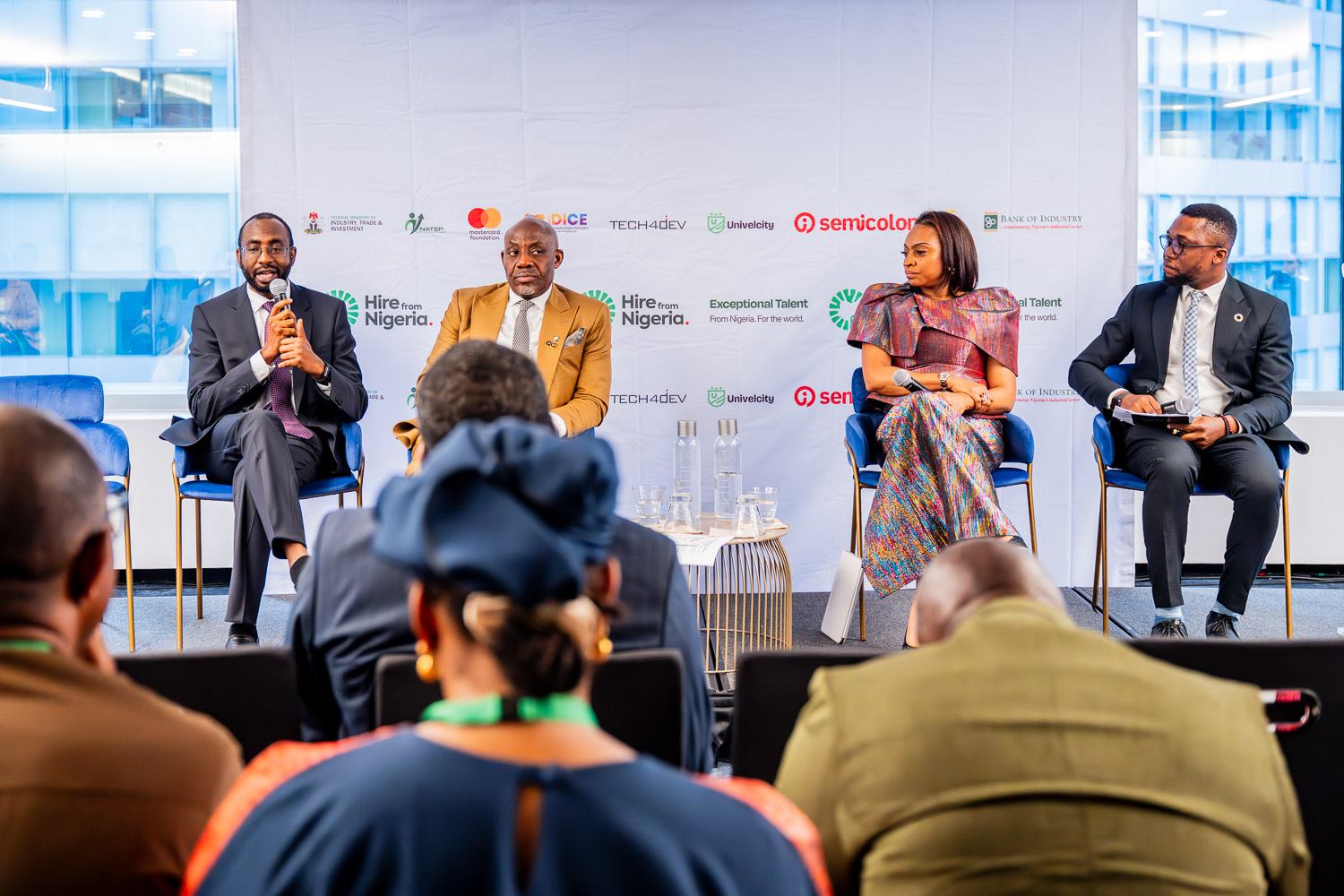
UNGA81: NITDA DG Champions AI-Driven Services to Position Nigeria for Global Digital Economy
Nigeria must move beyond traditional outsourcing and position itself as a global hub for artificial intelligence-enabled digital services, the Director-General/CEO of the National Information Technology Development Agency (NITDA), Kashifu Inuwa Abdullahi, CCIE, has said.
Abdullahi stated this on the sidelines of the 81st United Nations General Assembly (UNGA81) during the “Hire from Nigeria” session organised by the Nigeria Economic and Trade Advancement Programme (NATEP).
The session brought together the NITDA chief and the Minister of Industry, Trade and Investment, Dr Jumoke Oduwole, as well as the Minister of Education, Dr Moruf Alausa, for discussions on impact sourcing, global trade, skills development and inclusive job creation.
Abdullahi said Nigeria’s growing digital economy presented an opportunity to redefine its role in the global services market by transitioning from conventional business process outsourcing to artificial intelligence-augmented and IT-enabled services.
According to him, the country’s competitive advantage should not be limited to providing a workforce for global businesses, but should focus on equipping Nigerians with the capabilities to understand, develop and apply emerging technologies to create higher-value economic opportunities.
He noted that the rapid advancement of AI was reshaping the global economy, making it imperative for Nigeria to prepare its workforce not only to use the technology but also to participate in its development and deployment.
The NITDA DG also highlighted the importance of trust and security in attracting international businesses to Nigeria’s digital services ecosystem.
He pointed to the country’s evolving frameworks and initiatives covering data protection, digital identity, cybersecurity, digital infrastructure assurance, data classification, sovereign cloud and software quality assurance as key components for building confidence among global investors and service providers.
Abdullahi further cited Project BRIDGE, which targets the deployment of 90,000 kilometres of fibre infrastructure, alongside the Federal Government’s Cloud First Policy and other initiatives designed to stimulate private-sector investment in computing infrastructure and AI factories.
He said stronger digital infrastructure would be critical to enabling Nigeria’s growing technology workforce to participate meaningfully in the global digital economy.
The NITDA chief also stressed the importance of representation in the development of artificial intelligence, warning that countries and communities excluded from datasets used to develop AI systems could face the risk of being underrepresented in technologies that increasingly influence economic and social life.
He noted that Nigeria was already taking steps to develop indigenous AI capabilities through initiatives such as the National Centre for Artificial Intelligence and Robotics (NCAIR) and the National Artificial Intelligence Strategy.
According to him, these efforts are intended to strengthen Nigeria’s domestic innovation ecosystem while connecting the country’s technology talent with emerging opportunities in the global digital economy.
Abdullahi’s intervention at the session reinforced the need for Nigeria to transition from being primarily a supplier of digital labour to becoming a producer of higher-value technology-enabled services.
He said the country’s opportunity lies in combining its human capital with artificial intelligence, trusted digital infrastructure and strong regulatory frameworks to compete more effectively in the evolving global digital services market.