Big Tech, AI and the Future of Nigerian Journalism
By Shuaib S. Agaka
When Nigeria announced an investigation into Google, Meta, X and several generative artificial intelligence platforms, many viewed it as yet another regulatory confrontation with global technology companies. I believe it represents something far more significant. It is one of the most consequential tests of Nigeria’s digital policy in recent years because its outcome could determine whether the country’s media industry remains economically viable in an era where technology platforms increasingly control how news is discovered, distributed and monetised.
At first glance, the complaint filed by the Nigerian Press Organisation appears to centre on lost advertising revenue. In reality, it raises a much deeper question: have technology companies built enormously profitable businesses by relying on journalism they neither produce nor adequately compensate?
It is necessary to point out that the National Information Technology Development Agency (NITDA) regulates global tech giants and large digital platforms operating in Nigeria primarily through its Code of Practice for Interactive Computer Service Platforms/Internet Intermediaries. These guidelines mandate local registration, data compliance, and the removal of harmful, illegal, or misleading content.
By the guidelines, major tech platforms must adhere to several strict regulatory and operational parameters to maintain their license to operate within the country.
Meanwhile, the emergence of generative artificial intelligence has made that question even more urgent. Nigerian publishers argue that their reports are being used to train AI systems capable of summarising, synthesising or reproducing their content without licensing agreements, meaningful attribution or fair financial compensation. In some cases, these AI-generated responses may even reduce the incentive for users to visit the original news sources.
This is no longer merely a dispute over advertising revenue. It is a global debate about who creates value in the digital economy—and who ultimately captures it.
Over the past two decades, digital platforms have fundamentally reshaped how people consume news. Millions of users no longer visit newspaper websites directly. Instead, they rely on Google searches, Facebook feeds, WhatsApp groups, X timelines and increasingly AI-powered assistants to access information.
While this transformation has expanded audiences, it has also disrupted the economics of journalism.
News organisations continue to bear the costs of reporting, fact-checking, editing and investigative journalism. Yet a substantial share of the digital advertising revenue generated by those audiences now accrues to technology companies equipped with unparalleled data analytics, sophisticated advertising algorithms and global digital ecosystems.
The consequences have been profound. Across the world, newsrooms have downsized, local newspapers have disappeared, investigative journalism has become increasingly expensive, and regional reporting has steadily declined. Ironically, journalism has never reached more people, yet sustaining it has rarely been more difficult.
Nigeria is experiencing the same disruption.
With over 154 million active internet subscriptions, according to the Nigerian Communications Commission, digital platforms have become the primary gateway to information for millions of Nigerians. Their influence extends well beyond content distribution. They increasingly shape who profits from journalism, who attracts audiences, and ultimately, who survives in an increasingly competitive media landscape.
Artificial intelligence has further complicated this equation.
Large Language Models (LLMs) are trained using enormous volumes of publicly available online information, including news reports. Publishers worry that if AI systems can answer users’ questions using knowledge derived from their journalism—without licensing agreements or fair compensation—the media industry risks financing technologies that may eventually compete directly with the very organisations that produced the original reporting.
This concern is neither theoretical nor uniquely Nigerian.
Around the world, governments are grappling with the same challenge, albeit through different regulatory approaches.
Australia was among the first to challenge the long-standing assumption that digital platforms could monetise news content without paying for it. Its 2021 News Media Bargaining Code fundamentally altered the balance of power between publishers and technology companies.
The resistance was immediate. Google warned it might withdraw its search engine from Australia, while Meta temporarily removed news content from Facebook, inadvertently blocking emergency services and public information. Public backlash forced renewed negotiations, ultimately leading to commercial agreements worth hundreds of millions of Australian dollars between digital platforms and Australian news organisations.
Australia demonstrated that governments can successfully rebalance negotiating power when regulation is backed by political commitment.
Canada pursued a similar path through its Online News Act but encountered a different outcome. Rather than negotiate, Meta chose to remove news entirely from Facebook and Instagram. Google eventually reached a settlement with the Canadian government, but Meta’s continuing news blackout illustrates an important lesson: regulation can influence corporate behaviour, though not always in the manner policymakers anticipate.
South Africa adopted a more measured strategy.
Instead of framing the issue primarily as a political dispute, its Competition Commission conducted extensive market studies examining digital advertising, search visibility and revenue distribution before recommending targeted remedies. That evidence-based approach secured commitments from Google to provide substantial support to South African publishers while avoiding prolonged political confrontation.
These international experiences reveal that no universal solution exists.
Australia illustrates the effectiveness of strong legislative intervention. Canada highlights the potential for unintended consequences. South Africa demonstrates the value of competition-based regulation grounded in rigorous economic analysis rather than political rhetoric.
For Nigeria, these lessons are particularly instructive.
Our media ecosystem differs significantly from those of Australia or Canada. Digital subscriptions remain relatively limited, advertising markets are comparatively smaller, and many news organisations continue to rely on business models developed long before the digital revolution.
Simply compelling technology companies to make financial payments will not, by itself, resolve these structural challenges.
The ongoing investigation should therefore pursue broader objectives.
It presents an opportunity to examine competition policy, copyright protection, AI training practices, digital advertising markets and the commercial relationship between multinational technology companies and Nigerian media organisations.
The objective should not merely be compensation.
It should be the creation of a fairer digital marketplace—one that rewards technological innovation without undermining the sustainability of credible journalism.
The investigation also signals Nigeria’s growing confidence in regulating multinational digital corporations.
From data protection and consumer rights to competition policy and artificial intelligence governance, the country is increasingly demonstrating that global technology firms are not beyond the reach of domestic regulation. Whether one agrees with every regulatory decision is secondary to a broader reality: Nigeria is asserting its right to shape the rules governing its own digital economy.
That confidence is both timely and necessary.
Journalism remains one of democracy’s essential public goods. It informs citizens, scrutinises power, exposes corruption and promotes accountability. Yet quality journalism is expensive. It demands skilled professionals, rigorous editorial processes and sustained financial investment.
Technology platforms undoubtedly create enormous public value by making information widely accessible. But they also benefit from an information ecosystem sustained by news organisations. If that ecosystem continues to weaken, the consequences will extend far beyond publishers’ balance sheets. Public trust, democratic accountability and the quality of national discourse will inevitably suffer.
Whether the Federal Competition and Consumer Protection Commission (FCCPC) ultimately finds evidence of anti-competitive conduct or other legal violations is a matter for due process.
What is beyond dispute, however, is that the questions now being asked are both legitimate and long overdue.
Nigeria may have entered this global conversation later than many advanced economies, but that timing could become its greatest advantage. Others have already absorbed the costs of experimentation. Their successes, failures and unintended consequences provide valuable lessons.
With NITDA’s guidelines in place, Nigeria now has an opportunity to craft a regulatory framework that reflects its own market realities while protecting innovation, encouraging investment and ensuring that those who produce credible journalism are not excluded from the value their work creates.
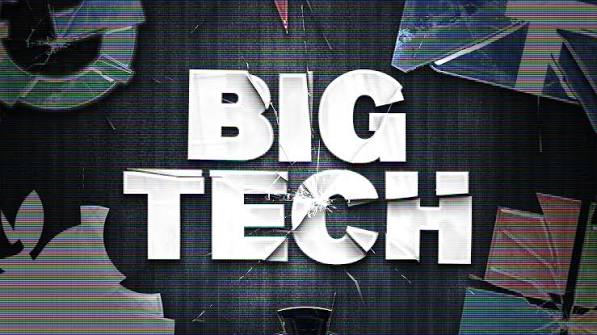
If approached with wisdom and balance, this investigation may ultimately be remembered not as another confrontation with Big Tech, but as the moment Nigeria began redefining the relationship between technology, artificial intelligence and journalism for the digital age.
Shuaib S. Agaka is a tech journalist and digital policy analyst based in Kano.