EXPLAINER: From Genocide Allegations to US-Nigeria Security Partnership
By Abbas Badmus,
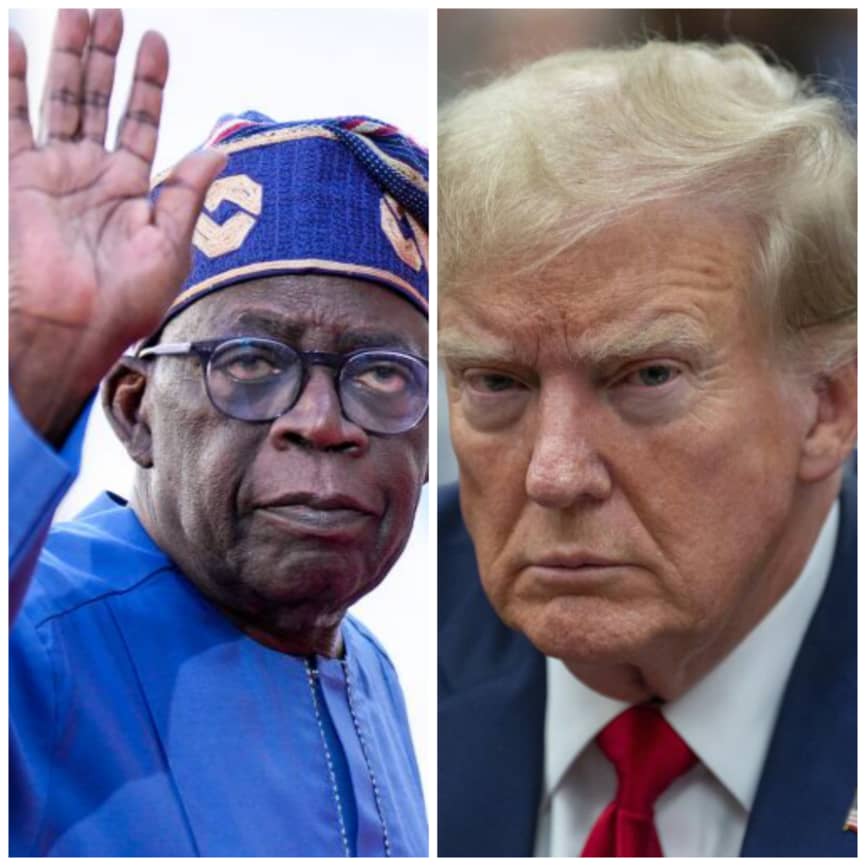
The diplomatic relationship between Nigeria and the United States has witnessed a significant shift in recent months, moving from heightened tensions over allegations of Christian persecution and genocide to renewed security cooperation against terrorism, banditry and other violent threats.
What initially appeared to be a potential diplomatic confrontation has gradually evolved into a strategic partnership, demonstrating how dialogue, diplomatic engagement and shared security interests can help resolve disagreements between sovereign nations.
But how did the controversy begin, what steps did Nigeria take to address Washington’s concerns, and why is the United States now providing intelligence and military support to Nigerian security forces?
How Did the Genocide Allegations Begin?
The controversy gained international attention in 2025 following renewed allegations by some American lawmakers and religious advocacy groups that Christians were being systematically targeted and killed in Nigeria.
On October 31, 2025, US President Donald Trump redesignated Nigeria as a Country of Particular Concern (CPC), citing concerns over religious freedom and alleged persecution of Christians.
The development intensified diplomatic tensions, particularly after Trump made statements threatening possible American military intervention if the Nigerian government failed to address the killings.
The allegations were subsequently amplified by sections of the American political establishment, generating concerns about Nigeria’s international image, sovereignty and diplomatic relations.
However, the Nigerian government rejected the characterisation of the country’s security challenges as a state-backed Christian genocide.
The Federal Government maintained that Nigeria was confronted with a complex security crisis involving Boko Haram, Islamic State West Africa Province (ISWAP), armed bandits, kidnapping networks, communal conflicts and other criminal organisations whose victims cut across religious and ethnic boundaries.
While acknowledging that Christians had suffered devastating attacks, the government argued that Muslims and other Nigerians were equally victims of terrorism and violent criminality.
The distinction was important because describing the entire security crisis as a religious extermination campaign risked overlooking its complex causes and the widespread suffering of Nigerians across different communities.
Nigeria’s Diplomatic Response: Dialogue Rather Than Confrontation
Rather than allowing the disagreement to degenerate into a prolonged diplomatic crisis, the Tinubu administration pursued diplomatic engagement with Washington.
The Ministry of Foreign Affairs engaged American authorities, while government officials intensified international communication to explain Nigeria’s security situation and challenge what they considered misleading interpretations of the violence.
President Bola Ahmed Tinubu’s administration also emphasised Nigeria’s constitutional commitment to religious freedom, freedom of worship and the protection of all citizens, irrespective of their religious affiliations.
Presidential spokespersons and other government representatives participated in media engagements to clarify the country’s position and explain the government’s efforts to tackle insecurity.
Nigeria’s diplomatic approach also involved strengthening communication with American officials and demonstrating its willingness to cooperate in addressing genuine security and religious freedom concerns.
An important development was the establishment of the Nigeria-US Joint Working Group on January 22, 2026, in Abuja, involving Nigeria’s National Security Adviser, Mallam Nuhu Ribadu, and American officials.
The platform provided an institutional framework for discussing religious freedom, protection of vulnerable communities, counterterrorism, accountability and military cooperation.
The engagement subsequently continued in Washington, where both countries reviewed progress and identified areas requiring further attention.
From Diplomatic Tension to Security Cooperation
Perhaps the most significant development in the relationship has been the transition from diplomatic disagreement to practical security collaboration.
Rather than allowing differences over the characterisation of Nigeria’s insecurity to undermine their longstanding relationship, both countries recognised the importance of working together against common security threats.
On December 25, 2025, the United States conducted military strikes against Islamic State-linked targets in northwestern Nigeria. The operation was carried out in coordination with Nigerian authorities, according to the US Africa Command and Nigerian officials.
The strikes marked a significant development in direct American military involvement in Nigeria’s counterterrorism operations.
In February 2026, approximately 100 US military personnel arrived in Nigeria to support training and technical cooperation. Subsequent reporting indicated an expanded deployment of about 200 personnel, alongside intelligence-gathering assets.
The American personnel were assigned non-combat responsibilities, including intelligence sharing, surveillance, technical assistance and training for Nigerian security forces.
In March 2026, Reuters reported that American MQ-9 drones were operating in Nigeria to gather intelligence and support Nigerian military operations. Nigerian defence authorities confirmed that the cooperation was helping commanders identify, track and respond to terrorist threats.
The partnership has also involved intelligence fusion, satellite imagery, military training and efforts to disrupt terrorist financing networks.
Terrorist Leaders Neutralised Through Improved Intelligence Cooperation
One of the clearest indications of the renewed security partnership has been the role of intelligence sharing in operations against high-profile terrorist commanders.
In May 2026, Nigerian and American forces conducted a joint operation that eliminated Abu-Bilal al-Minuki, a senior Islamic State figure whom President Trump described as the global second-in-command of ISIS.
The operation demonstrated the growing importance of intelligence coordination and operational cooperation between both countries.
More recently, Nigeria’s Defence Minister, General Christopher Musa, disclosed on November 16, 2026, that real-time American intelligence, satellite imagery and military training were helping Nigerian troops conduct operations against terrorist and bandit networks.
According to the minister, several terrorist and bandit leaders were killed during overnight operations in the Northwest and Northeast.
He explained that improved intelligence capabilities had strengthened the military’s ability to locate militant leaders, track their movements and disrupt their operational networks.
The Defence Minister also disclosed that Nigeria expected additional helicopters from the United States and Italy to strengthen its military capabilities.
These developments demonstrate that the relationship has moved beyond diplomatic discussions to practical security cooperation with operational implications.
Has the Diplomatic Tension Subsided?
The atmosphere surrounding the initial genocide allegations has considerably changed.
The establishment of the Joint Working Group, sustained diplomatic engagements, military cooperation and intelligence-sharing arrangements have helped reduce the immediate tension between Abuja and Washington.
At its second session in Washington on August 12, 2026, the Joint Working Group reviewed progress in protecting vulnerable communities, prosecuting terrorism suspects, strengthening security institutions and resettling internally displaced persons.
The United States also acknowledged some of Nigeria’s efforts, including the prosecution of hundreds of Boko Haram and ISIS-WA suspects and plans to recruit and train additional police personnel.
The engagement indicated that both governments were increasingly addressing their differences through established diplomatic and security channels.
Nevertheless, it would be inaccurate to suggest that the United States has withdrawn its religious freedom concerns or formally reversed Nigeria’s CPC designation. The concerns remain part of the bilateral discussions.
Similarly, Nigeria’s security challenges have not disappeared. Attacks by Boko Haram and ISWAP, banditry, kidnapping and communal violence remain serious national concerns.
Indeed, the Defence Minister’s November 2026 disclosure that terrorist attacks on military positions have increased in recent weeks underscores the need for sustained operations.
What has changed significantly is the diplomatic atmosphere and the level of practical cooperation between the two governments.
Why Does the United States Still Support Nigeria?
The continued American security support reflects the strategic importance of Nigeria to regional stability and international counterterrorism efforts.
Nigeria is Africa’s most populous country and one of the continent’s most influential political and economic powers. Its stability has significant implications for West Africa, the Sahel region and the wider international community.
The expansion of terrorist networks across the Sahel, the activities of Islamic State affiliates and the increasing links between armed groups operating across national borders have made cooperation with Nigeria particularly important to Washington.
For the United States, supporting Nigeria’s counterterrorism capabilities is also a way of confronting extremist networks that threaten regional and international security.
For Nigeria, the partnership offers access to advanced intelligence capabilities, surveillance technology, military training and technical support that can strengthen domestic security operations.
This relationship is not entirely new. Both countries have maintained defence cooperation for years through military training, intelligence support, arms procurement and counterterrorism programmes.
The renewed partnership therefore represents an expansion of an existing relationship rather than the beginning of an entirely new security alliance.
The Bigger Picture: Diplomacy, Sovereignty and Shared Security Interests
The Nigeria-US experience illustrates an important dimension of international relations: diplomatic disagreements do not necessarily have to result in permanent hostility.
Nigeria maintained its rejection of the Christian genocide narrative while demonstrating willingness to address concerns about religious freedom, protect vulnerable communities and strengthen its security institutions.
The United States, on its part, maintained its concerns but continued engaging Nigeria through diplomatic and military channels.
The outcome has been a relationship increasingly defined by dialogue, intelligence cooperation and shared security interests rather than the confrontational rhetoric that characterised the initial controversy.
For Nigeria, the priority should remain the protection of every citizen, regardless of religion, ethnicity or geographical location.
The ultimate measure of the renewed partnership will not simply be the number of terrorist commanders eliminated or the quantity of military equipment supplied. It will be whether the cooperation produces lasting improvements in public safety, reduces attacks on communities, facilitates the return of displaced persons and restores confidence in the ability of the Nigerian state to protect its citizens.
The diplomatic episode has demonstrated that Nigeria can defend its national position while maintaining constructive international partnerships.
Ultimately, the fight against terrorism requires more than military strength. It demands effective diplomacy, reliable intelligence, international cooperation, accountability and a sustained commitment to protecting the lives and rights of all Nigerians.