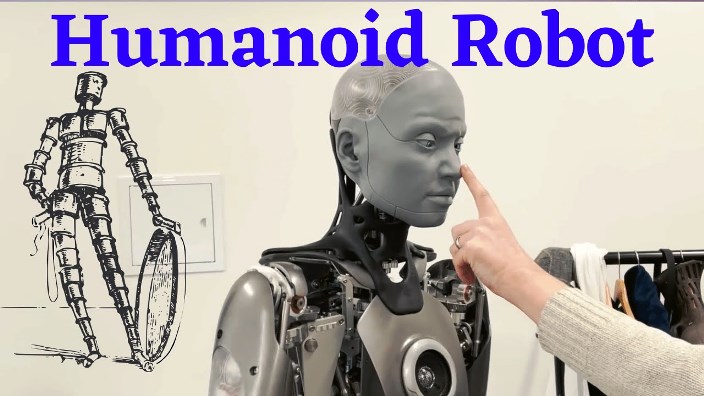
About 7,000 humanoid robots were sold worldwide last year for industrial and professional service applications, providing an early measure of a market that robotics companies and investors expect to expand rapidly in the coming years.
Figures compiled by the International Federation of Robotics show that humanoid robots remain a small part of the global robotics industry despite growing investment and increasingly sophisticated demonstrations.
China, the world’s largest market for industrial robots, is emerging as a major centre of activity. The country recently showcased humanoid robots running, boxing and performing other tasks at its robot games, highlighting the pace of development in the sector.
Under the IFR’s definition, a humanoid robot has a human-like appearance and can operate autonomously in an environment designed for people. The definition does not require a robot to have legs.
The 7,000-unit figure represents one of the first industry-wide measurements of humanoid robot sales as manufacturers move from research and demonstrations towards commercial applications.
However, the number remains tiny compared with the broader robotics market.
Around 542,000 conventional industrial robots were installed worldwide in 2024, while an estimated 199,000 service robots were sold for applications including transportation, hospitality and cleaning.
Susanne Bieller, secretary general of the Frankfurt-based IFR, said humanoid robots still account for only a fraction of the global robot population.
She also noted that many of the humanoid robots sold last year were not being used for productive commercial work. Some were purchased by research institutions and companies primarily to generate data that could help improve artificial intelligence models.
Automotive manufacturers are among the early commercial adopters. Bieller said carmakers are conducting pilot programmes involving single-digit or, in some cases, double-digit numbers of humanoid robots at their factories.
The IFR, which has collected global robotics statistics for three decades, began tracking humanoid robots separately as interest in the technology accelerated.
The relatively small sales figures contrast sharply with forecasts for rapid expansion.
Bank of America Global Research estimates that 90,000 humanoid robots could be shipped this year, rising to 1.2 million by 2030.
The IFR’s figures differ from some broader market forecasts because its tally is based on supplier and national industry association data and excludes consumer and military humanoid robots. Medical robots are also classified separately.
The gap between current sales and future forecasts reflects both the potential and uncertainty surrounding humanoid robotics. Companies are investing heavily in machines that can operate in environments designed for humans, potentially allowing them to perform tasks without requiring factories and workplaces to be fundamentally redesigned.
For now, however, the industry remains in an early commercial phase, with research, data collection and pilot projects accounting for a significant share of the humanoid robots entering the market.