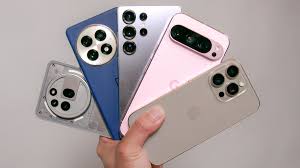
Smartphone ownership in Nigeria rose to 75% in 2025, up from 64% in 2023, as mobile devices become increasingly important for accessing digital services, according to a new KPMG study.
The Nigeria Smartphone Study, conducted by KPMG in partnership with Orange Group Nigeria, surveyed 13,251 respondents across 12 major Nigerian cities. It examined smartphone ownership, application usage and changing digital behaviour among consumers.
KPMG said the increase reflects a combination of greater smartphone affordability, improving connectivity and Nigeria’s large and youthful population.
The expansion of smartphone ownership is also being accompanied by increased use of digital applications across financial services, telecommunications, commerce, entertainment, education and transportation.
“Smartphone ownership in Nigeria continues to grow significantly as consumers increasingly transition from feature phones to internet-enabled devices,” the report said.
Data from the Nigerian Communications Commission cited by KPMG showed that Nigeria had 157 million internet subscribers as of May 2026, while data consumption exceeded 1.5 million terabytes.
However, the growth in smartphone ownership has not eliminated disparities in digital access.
KPMG said more than one-third of mobile subscribers were still using 2G networks as of May 2026, highlighting gaps in the quality and depth of connectivity.
“More than a third of mobile subscribers were still on 2G as of May 2026, highlighting the continuing disparity in the depth and quality of digital access,” Lawrence Amadi, Partner and Head of Technology, Media & Telecommunications at KPMG Africa, said.
The report identified infrastructure limitations, affordability, digital literacy gaps and cybersecurity concerns as continuing barriers to wider digital participation.
KPMG said smartphones have increasingly moved beyond communication and entertainment to become tools for economic participation, particularly as more Nigerians use mobile applications for financial transactions, commerce, education and transportation.
The study suggests that rising smartphone ownership is expanding the potential reach of Nigeria’s digital economy, while persistent gaps in connectivity and affordability continue to determine who can fully participate in it.