GITEX Nigeria 2026 Showcases Country’s Push Toward Sovereign AI, Digital Infrastructure and Tech Investment
By Abbas Badmus,
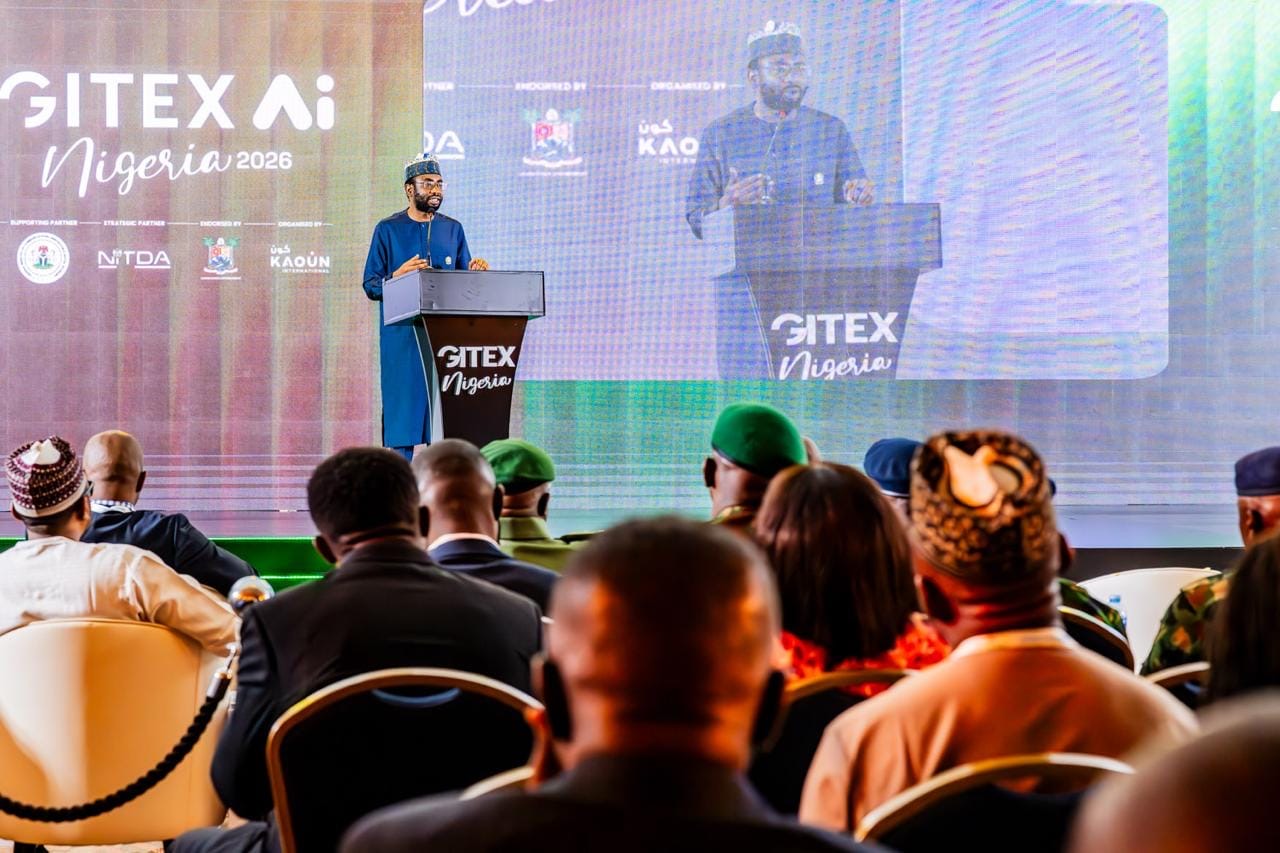
GITEX Nigeria 2026 opened in Abuja on Monday, drawing senior government officials, global technology leaders, investors, innovators and digital‑economy stakeholders for high‑level discussions on Nigeria’s expanding role in Africa’s technology and artificial intelligence landscape.
The second edition of the event, themed “Beyond Connectivity: The Bridge to Sovereign AI and Innovation,” began with the Government Leadership & AI Summit, which focused on digital infrastructure, artificial intelligence, data governance, cybersecurity, talent development and investment opportunities.
Held across Abuja and Lagos from August 31 to September 3, 2026, GITEX Nigeria is convened under the patronage of President Bola Ahmed Tinubu, supported by the Federal Ministry of Communications, Innovation and Digital Economy in collaboration with the National Information Technology Development Agency (NITDA). The Lagos State Government endorsed the event, while KAOUN International, global organiser of GITEX events, coordinated the programme.
FG: Nigeria Must Become a Producer of Technology
Representing the Secretary to the Government of the Federation, George Akume, the Permanent Secretary, Political and Economic Affairs Office, Mrs. Bekearedebo Augusta Warrens, said the conference theme was timely as Nigeria seeks to transition from being a consumer of technology to becoming a producer and exporter of digital solutions.
Akume highlighted reforms in digital identity, broadband infrastructure, technical talent development, cloud computing and data infrastructure as part of the government’s strategy to reposition Nigeria as a leading digital economy.
He cited the newly enacted NIMC Act 2026 as a major step toward strengthening Nigeria’s digital identity and data‑management systems. He also disclosed plans for a 90,000‑kilometre fibre‑optic network to extend connectivity nationwide.
The SGF noted that the government’s 3 Million Technical Talent (3MTT) programme had recorded 1.87 million registrations across all 774 LGAs, with more than 125,000 Nigerians trained in cloud computing, AI, cybersecurity and software engineering.
He added that the National Digital Cloud Policy aims to attract $750 million in private investment within 24 months.
“GITEX Nigeria is more than a technology conference,” Akume said. “It is a platform for partnerships, investment and the development of an African technology ecosystem capable of competing globally.”
NITDA: Nigeria Must Own Its AI Future
NITDA Director‑General Kashifu Inuwa Abdullahi said artificial intelligence should be treated as strategic national infrastructure. He warned that Nigeria must not repeat past mistakes by relying excessively on foreign technologies.
Inuwa said Nigeria must build capacity across the entire AI stack—connectivity, computing power, data centres, cloud infrastructure, algorithms, data governance and legal frameworks.
He stressed that Nigeria’s AI systems must be trained on locally generated and governed data to avoid bias and ensure relevance.
“If we really need an AI that will serve us, we need to train the AI with our data,” he said.
The NITDA DG also raised concerns about operational control over AI systems deployed in critical sectors, asking who controls the technologies Nigeria relies on, where data is stored and which laws govern them.
Senate: Technology Sovereignty Is National Security
Chairman of the Senate Committee on ICT and Cybersecurity, Senator Salisu Afolabi, said Nigeria’s technological development is inseparable from national security and economic sovereignty.
Representing the National Assembly, Afolabi said GITEX Nigeria demonstrates the country’s growing importance as a technology hub for Africa. He warned that digitising government operations without sufficient control over underlying technology could expose sensitive national data to external interests.
He disclosed that lawmakers were working on a National Digital Economy and Innovation Bill to strengthen Nigeria’s digital‑economy and cybersecurity framework, including emerging risks associated with AI. He added that cybercrime laws were being reviewed to address online child abuse, cyber‑enabled offences and other digital‑platform crimes.
Lagos Positions Itself as Africa’s Digital Infrastructure Capital
Representing Lagos State Governor Babajide Sanwo‑Olu, Commissioner for Innovation, Science and Technology Olatunbosun Alake positioned Lagos as a major investment destination for technology, AI and digital infrastructure.
Alake said Nigeria was increasingly being viewed as a market with strong returns due to ongoing economic reforms. He noted that Lagos had laid 3,000 kilometres of fibre‑optic cable between 2019 and 2025 and was attracting investment for 30,000 kilometres of fibre ducts along key economic corridors.
He said Lagos expects to exceed 250 megawatts of data‑centre capacity by 2035, while its Science Research and Innovation Council has committed nearly $2 billion to more than 75 startups and research programmes.
Alake urged investors to establish engineering operations in Lagos, deploy computing infrastructure, partner with Nigerian startups and leverage the country’s growing talent pool.
“Do not treat Lagos as a market to sell to. Treat Lagos as a platform to build from,” he said.
Nigeria’s Digital Future Takes Centre Stage
The opening of GITEX Nigeria 2026 sets the stage for several days of engagements involving policymakers, technology companies, investors, startups and innovators from Nigeria and beyond.
Discussions at the Abuja summit centred on strengthening digital infrastructure, developing homegrown AI capabilities, protecting data, improving cybersecurity and attracting investment into emerging technology sectors.
With activities continuing in Abuja and Lagos, organisers and government stakeholders are expected to use the event to deepen partnerships and translate discussions into investments, technology deployments, startup growth and new opportunities for Nigeria’s digital economy.