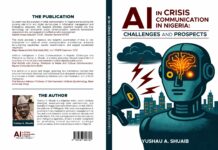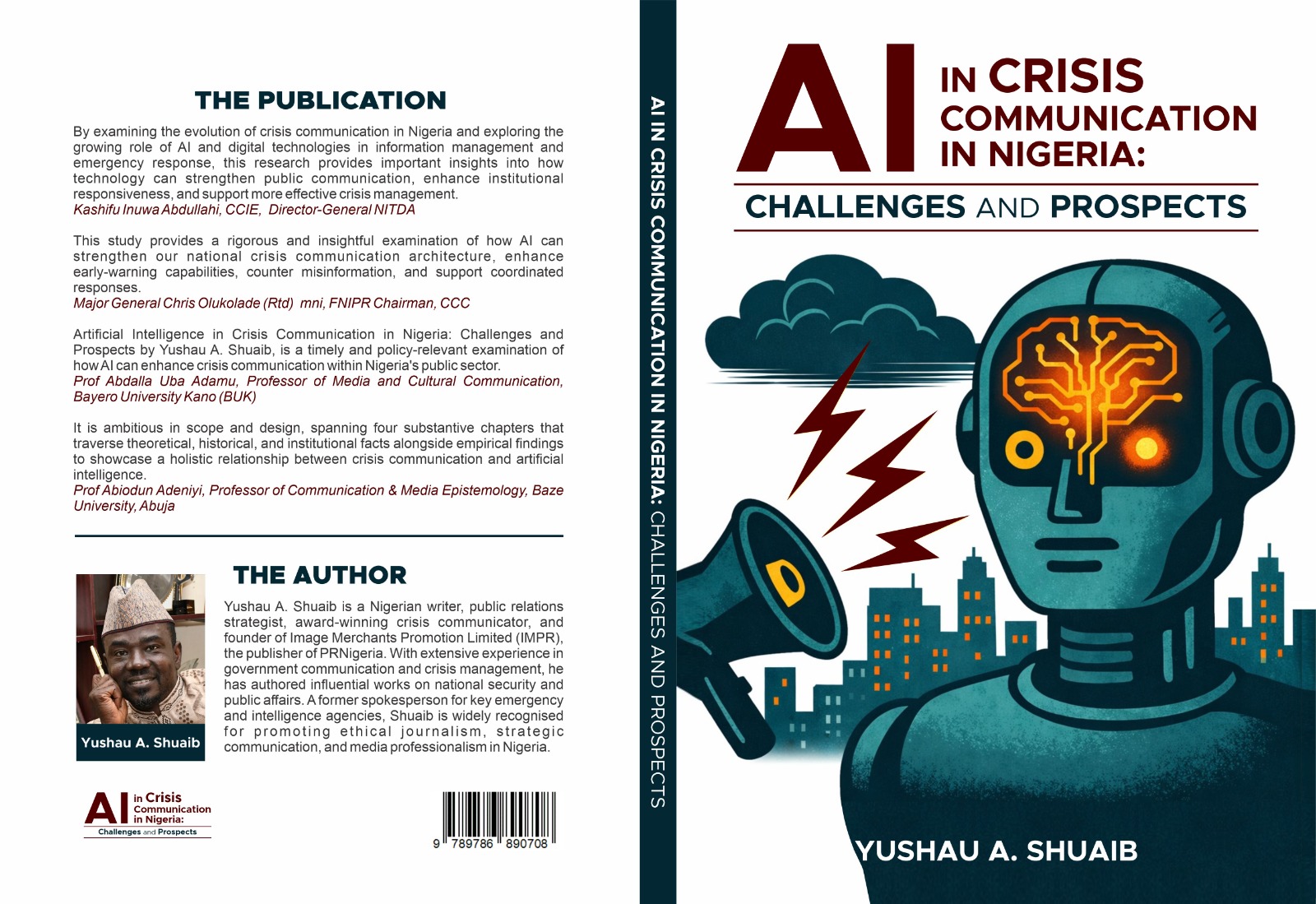
When Crises Meet Algorithms: A Journalist’s Take on Shuaib’s AI Breakthrough
By Abdulsalam Saheed Olarewaju
Artificial Intelligence is rapidly reshaping how societies gather, process and respond to information. In a country like Nigeria—where crises often demand swift, coordinated and credible communication—the question of how AI can strengthen public‑sector response systems is no longer theoretical. It is urgent. This is why AI in Crisis Communication in Nigeria: Challenges and Prospects, authored by Yushau A. Shuaib, arrives as a timely and relevant contribution for students, practitioners and policymakers navigating Nigeria’s digital communication landscape.
The study adopts a mixed‑methods approach, including the administration of 168 questionnaires, to examine how AI tools are influencing crisis communication within Nigeria’s public institutions. Organised into four chapters, the book offers a structured and accessible exploration of both the opportunities and the obstacles that accompany AI integration.
Chapter One lays the foundation by outlining the methodological framework and clarifying key concepts. Shuaib’s long-standing practical experience in crisis communication is evident here, grounding the study in real-world relevance.
Chapter Two reviews major theoretical perspectives—Situational Crisis Communication Theory, Networked Crisis Communication Theory and Diffusion of Innovations Theory—and demonstrates how these frameworks help explain the evolving relationship between AI and crisis response.
Chapter Three traces the historical development of crisis communication in Nigeria, showing how the field has shifted from traditional institutional messaging to more dynamic, digital engagement. It also highlights structural barriers to AI adoption. Limited smartphone access in remote communities, for example, restricts the reach of AI‑powered communication tools. The study reveals that only 15% of Nigerian government agencies currently use AI in their communication systems, with NEMA and NCDC standing out as early adopters. This statistic underscores the significant gap between potential and practice.
Chapter Four presents the study’s findings, outlining both the promise and the challenges of AI adoption. The analysis is practical and policy-relevant, offering insights that matter not only to academics but also to emergency responders, communication professionals and government officials.
Overall, Shuaib’s work fills an important gap at the intersection of artificial intelligence and crisis communication in Nigeria. It provides a grounded assessment of the current state of AI adoption and identifies the steps needed to strengthen public-sector communication systems. For government agencies, policymakers, researchers and practitioners seeking to improve crisis response, this book is a valuable resource that deserves close attention.