

NITDA Unveils Framework to Standardise Innovation Hubs, Spread Startup Growth Nationwide
By Abbas Badmus,
The National Information Technology Development Agency (NITDA) has commenced efforts to standardize innovation hubs across Nigeria as part of measures to decentralize the country’s technology ecosystem and create more opportunities for innovators, entrepreneurs and startups outside major technology centres such as Lagos and Abuja.
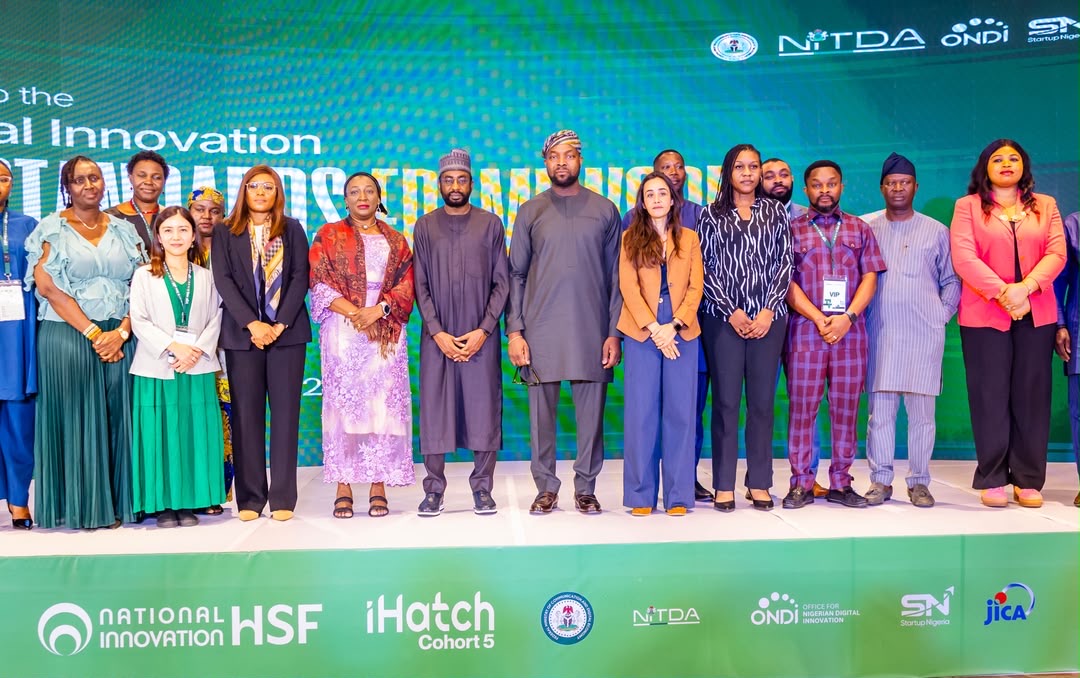
The agency disclosed this at the National Innovation Hub Standards Framework Technical Validation Workshop held on Thursday, August 20, 2026, at the Abuja Continental Hotel, Abuja.
The workshop brought together innovation hub owners, investors, development partners, government representatives and other stakeholders to review and validate the proposed National Innovation Hub Standards Framework.
Speaking at the event, NITDA’s Director-General and Chief Executive Officer, Kashifu Inuwa Abdullahi, described the framework as a major step towards ensuring that innovation is more evenly distributed across the country.
According to him, innovation thrives within an ecosystem and such ecosystems must be deliberately designed and strengthened to enable innovators to transform ideas into impactful businesses.
“Today for me marks a remarkable milestone in our journey of making innovation to be evenly distributed in Nigeria,” Abdullahi said.
He explained that innovation hubs have increasingly become important orchestrators of technology ecosystems, providing spaces where innovators, students and entrepreneurs can develop ideas, access support and move their solutions from conception to market.
The NITDA boss said the proposed framework was not intended to be prescriptive, but rather to provide guidance that would help hubs assess their capabilities, identify gaps and develop pathways towards maturity.
He noted that Nigeria has more than 339 innovation hubs, but that many of them are concentrated in Lagos, Abuja and a handful of other states.
Abdullahi said the uneven distribution of hubs and ecosystem support meant that talented Nigerians in other parts of the country were often forced to travel to established technology centres to access opportunities.
He stressed that every state has its own pool of talent, challenges and economic strengths that could be harnessed to develop locally relevant innovations.
“We don’t need to build Yaba Tech everywhere. Every state is unique. We can look at the problems around each state and the strengths of each state to build on that,” he said.
The framework, he added, would provide hubs with a pathway for growth and maturity through seven key dimensions and about 35 assessment categories, enabling operators to understand their current position and identify areas requiring improvement.
Kashifu urged stakeholders participating in the validation exercise to provide constructive feedback, stressing that the document was an initial draft rather than a final framework.
He also called for stronger collaboration between innovation hubs, government, investors, large corporations, development partners and academic institutions.
According to him, the ecosystem requires talent, entrepreneurs, risk-capital providers and large corporate organisations that can provide markets for innovative products, while government should focus on creating the right policies and enabling environment.
He particularly identified the weak connection between academia and industry as one of the major gaps in Nigeria’s innovation ecosystem.
The NITDA DG disclosed that the Federal Government was already working with the Ministry of Education to integrate digital skills into formal education, with the aim of producing graduates equipped with the capabilities required to build and scale businesses.
Also speaking, the Minister of Communications, Innovation and Digital Economy, Dr Bosun Tijani, said Nigeria had developed a clear understanding of the role technology must play in transforming the economy and improving the competitiveness of different sectors.
Tijani said technology was critical to the development of sectors including agriculture, education and healthcare, adding that Nigeria’s digital transformation strategy could be understood through three interconnected layers.
He identified the first as the foundational layer, comprising infrastructure such as fibre-optic networks, satellites, telecommunications towers and data centres.
The second, he explained, was the technology stack, which includes systems such as digital identity, data exchange and interbank settlement infrastructure that allow innovators to build solutions.
The third layer, he said, comprises the applications and businesses created by innovators to solve societal and economic problems.
Tijani cited Nigeria’s telecommunications liberalisation, the development of the interbank settlement system and the Bank Verification Number (BVN) as examples of foundational and middle-layer investments that helped create an environment for the emergence of a strong fintech ecosystem.
He argued that Nigeria’s success in producing technology unicorns was partly linked to deliberate government and industry investment in the infrastructure and systems that enabled innovators to build at scale.
The minister said the Federal Government was now intensifying investment in the digital foundation, including plans to deploy about 90,000 kilometres of fibre-optic infrastructure.
According to him, the project, which is expected to commence in October, will significantly expand broadband connectivity across the country.
He added that the government was also planning to deploy about 3,700 telecommunications towers in underserved communities, noting that more than 20 million Nigerians still live in areas without adequate telecommunications access.
Tijani further highlighted the importance of Nigeria’s communication satellite in reaching locations where terrestrial infrastructure would be difficult to deploy, while noting ongoing efforts to strengthen the country’s identity infrastructure and other digital systems.
However, the minister stressed that investment in infrastructure and digital platforms would not achieve its full potential without corresponding investment in the innovation hubs and community spaces where entrepreneurs develop their ideas.
Drawing from his previous experience in the technology ecosystem, Tijani said innovation hubs require adequate resources to recruit skilled personnel capable of providing quality support to entrepreneurs.
He cited CcHub as an example of what could be achieved when innovation ecosystems receive the necessary support, arguing that improving the quality of hubs across Nigeria could unlock new technology companies and entrepreneurs from different parts of the country.
“If we have all the hubs in Nigeria at the same level of quality as CcHub, or let’s say 50%, there’ll be more tech companies not just from Lagos, but from across the country,” he said.
Tijani said strengthening hubs in states such as Uyo, Calabar and other emerging technology centres could help create businesses, generate employment and expand Nigeria’s tax base.
He maintained that building a larger and more diversified economy would require Nigeria to support technology-driven businesses capable of operating beyond the traditional oil and gas sector.
Meanwhile, the National Coordinator of the Office for Nigerian Digital Innovation (ONDI), Victoria Fabumi, described the proposed framework as an instrument for strengthening the capacity of innovation hubs to support startups.
Fabumi likened startups to “babies” that require nurturing, while describing innovation hubs as the “mothers” responsible for providing the support necessary for their growth.
She said the framework was designed to strengthen the hubs so they could provide entrepreneurs with the required support to develop sustainable businesses and deliver impact at scale.
According to her, the framework would also help ensure that innovation is no longer concentrated in urban centres but becomes more widespread across the country.
She expressed optimism that the initiative would help produce innovative solutions from states such as Zamfara, Yobe, Osun and Jigawa, among others, thereby contributing to the Federal Government’s economic development agenda.
The validation workshop therefore marked another step in NITDA’s efforts to build a more coordinated, inclusive and mature innovation ecosystem in Nigeria, with stakeholders expected to contribute their expertise towards refining the framework before its final adoption and implementation.














 has commenced efforts to standardise innovation hubs across Nigeria as part)