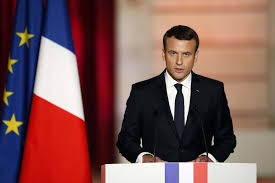
French President Emmanuel Macron has called on the European Union to introduce a bloc-wide ban on social media access for children under 15, after France’s attempt to impose its own restrictions was blocked by the country’s Constitutional Council.
Macron made the appeal in a letter to European Commission President Ursula von der Leyen dated August 29, arguing that a common European approach was needed to protect children across the 27-member bloc.
“I believe it has now become essential to go further,” Macron wrote, calling for new European legislation to harmonise a ban on social media access for children under 15.
France had planned to introduce its national restrictions in September, but the Constitutional Council struck down the legislation this summer, ruling that the measure disproportionately interfered with freedom of expression.
Macron has now turned his attention to an EU-wide approach, making restrictions on children’s access to social media a major priority during the final year of his presidency.
Several European countries are considering tighter controls as concerns grow over the effects of social media on children’s mental health and online safety. However, some governments, particularly in Scandinavia, believe decisions about children’s social media use should remain primarily with parents.
Macron said France would also seek to rewrite its rejected legislation, although political divisions in parliament and difficult budget negotiations could make it challenging to pass a new national law.
The European Commission has already indicated that it intends to address children’s access to social media across the bloc.
Von der Leyen said in July that the EU would move towards limiting young children’s access to social media, following recommendations from two experts that proposed a gradual, age-based system.
Under that approach, children below 13 could receive only limited and supervised access, with restrictions gradually easing as they become older.
Macron is pushing for a stricter policy, calling for a blanket ban until the age of 15.
His proposal comes as governments around the world debate how best to protect children online while balancing concerns about privacy, freedom of expression and the practical challenges of enforcing age restrictions.
Australia introduced a landmark social media ban for children last year, providing a model that several governments are now examining as they consider their own regulations.
Macron is seeking support from other EU governments ahead of von der Leyen’s State of the Union address to the European Parliament later this month, potentially setting up a wider European debate over the future of children’s access to social media.